
A missing tooth is easy to describe. There’s a gap where a tooth used to be. You notice it when you smile. Perhaps you notice it more when eating. Sometimes it’s the practical inconvenience that bothers you; sometimes it’s the appearance. The replacement, however, is rarely as simple as the thing you can see.
That was one of the more useful things I learned when looking into dental implants in Manchester. I had initially thought about an implant as a straightforward sequence: place something in the jaw, attach a replacement tooth, and carry on. There’s considerably more decision-making underneath it.
First, there’s the question of what is actually being replaced
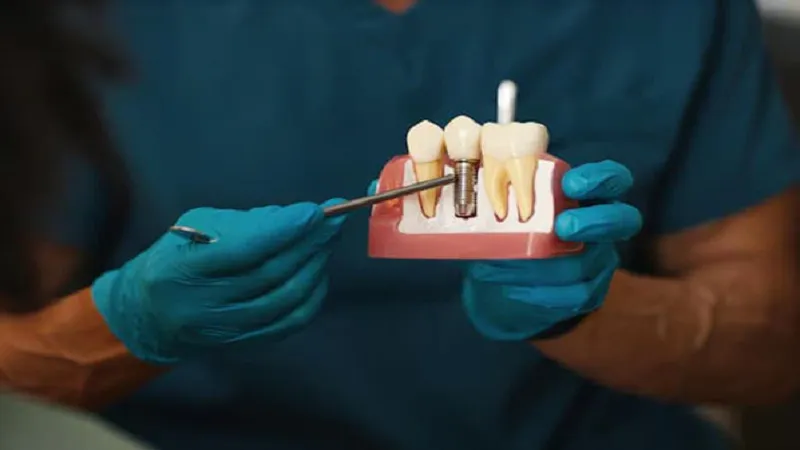
A natural tooth has a visible crown and a root below the gum. A dental implant is designed to replace the missing tooth root. It is typically made from titanium and sits within the jaw, providing support for a replacement tooth or another dental restoration.
That distinction changes the conversation. You’re not simply asking, “What should the new tooth look like?” You’re also asking whether there is suitable support for the implant, where it should be positioned and what type of restoration makes sense afterwards. Those are clinical questions rather than cosmetic ones.
The jaw becomes part of the picture
One of the things that surprised me was how much attention needs to go below the gum line. When a tooth is missing, the bone that previously supported its root may gradually change over time. That doesn’t mean everyone with a missing tooth will automatically need additional treatment, but it does mean the condition of the jaw needs to be assessed before implant placement.
This is where imaging becomes more than a technical extra. A two-dimensional photograph or ordinary visual examination can’t provide the same information as three-dimensional imaging of the area being considered for an implant.
CBCT scans can provide a three-dimensional view of the jaw and surrounding structures. That information can help clinicians assess the proposed implant site and plan treatment. While researching implant options locally, I found that Whitefield Dental includes CBCT imaging as part of its implant consultation and planning process. For me, that was a reminder that the visible gap is only a small part of the problem.
The replacement itself isn’t the only decision
There are different ways dental implants can be used. A single implant can support an individual replacement tooth. Dental implants may also be used to provide stable support for bridges or dentures when suitable.
That means the question isn’t always, “Can I have an implant?” It can become, “What role would an implant play in replacing my missing teeth?”
That distinction is useful because it moves the discussion away from the idea that implants are one standard treatment with one standard outcome. The treatment plan may vary depending on how many teeth are missing, the condition of the mouth and jaw, and the type of restoration needed.
Then there is the timing
I think this is one of the easiest parts of implant treatment to underestimate. If you’ve had a tooth removed, you may want the replacement sorted as quickly as possible. That’s understandable. But implant treatment involves biological healing as well as dental work.
The timing depends on the individual situation. Some people may be suitable for implant placement at a particular stage after extraction. Others may need time for healing or additional procedures first. There isn’t a sensible universal timetable that applies to every missing tooth.
That’s why an assessment matters more than a promise of speed. A good treatment plan should explain what needs to happen and why.
Bone grafting can enter the discussion
If there isn’t enough suitable bone at the proposed implant site, bone grafting may be considered. Again, this isn’t something that should be assumed simply because someone has had a tooth missing for a certain length of time. It needs to be assessed clinically. But knowing that the possibility exists helps explain why an implant consultation can involve considerably more than looking at the gap.
During my research, I noticed that implant-focused practices may have clinicians with experience in procedures such as bone grafting and other forms of implant-related surgery. Whitefield Dental, for example, lists an implantologist and oral surgeon among its clinical team, with experience that includes 3D implant planning and hard and soft tissue procedures.
That doesn’t mean every implant patient needs those procedures. It means the conversation can account for them if they become relevant.
The final tooth still matters
It would be easy to become so focused on the implant itself that the replacement tooth gets forgotten. But the visible result is what you’ll live with every day. The shape, shade and position of the restoration all matter. So does the way it functions with the rest of your teeth.
That is why implant treatment crosses several stages. The foundation has to be planned properly, but the restoration placed on top also needs to make sense within the mouth. It’s a little like renovating a room. You can’t judge the quality of the finished space by looking only at what sits underneath the floor.
I think the best implant question is a different one
If I were considering dental implants in Manchester, I wouldn’t start by asking how quickly I could get a replacement tooth. I’d ask what the proposed treatment involves from assessment to final restoration.
- What imaging is needed?
- Is there enough bone?
- What alternatives exist?
- What type of restoration is being considered?
- Are there additional procedures that might be required?
Those questions may make the process feel more complicated initially. But that isn’t necessarily a bad thing.
A missing tooth may look like one problem. The treatment plan behind replacing it can involve several decisions. Understanding those decisions gives you a much clearer idea of what you’re actually agreeing to.
And that, to me, is far more useful than simply knowing where the nearest implant clinic happens to be.