
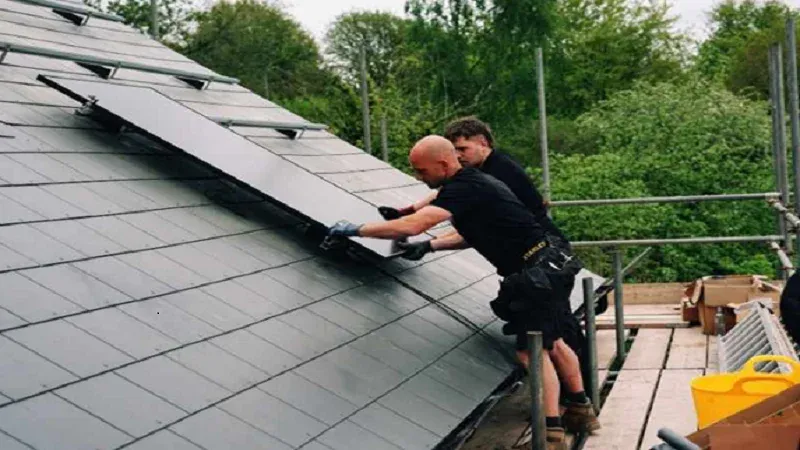
Does Britain get enough sun for panels to make a dent in a bill? It’s the first thing homeowners ask before they select solar panels in Bristol, and the honest answer is yes, with conditions. Those conditions come down to the roof far more than the sky.
Photovoltaic panels turn daylight into electricity, and they don’t need a clear blue sky to do it. Diffuse light still produces power, so a grey morning isn’t a dead one. Output follows the seasons, of course. June can be generous, while December gives you a fraction of that.
That swing is why a full year is the right yardstick for solar panels Bristol homes carry on their roofs, not a single bright week. The city sits in the south-west of England, one of the brighter corners of the country, and the long days from spring to early autumn do most of the work. Winter is the weak spot, and anyone who promises otherwise is selling something.
Climate sets the ceiling. Your roof decides how close you get to it.
Bristol solar panels and the roof they sit on
Direction matters most. A south-facing slope collects the most over the day, while east and west roofs give a flatter curve, with power on one side in the morning and on the other in the evening. For a household that’s busy at breakfast and again at dinner, that spread can match real use better than a single midday peak.
Pitch and space matter too. A steep, cluttered roof may only take a handful of panels, and a flat roof can carry frames tilted towards the sun, though that changes the layout and the cost.
Shade comes next, and it’s the one people underestimate. A tree, a chimney stack or a taller neighbouring house can drag down a whole string of panels, because panels wired together are held back by the weakest one. Designers deal with it by moving panels, skipping the worst patch of roof or adding optimisers that let each panel work independently.
Hills and tight terraces add a twist for Bristol solar panels, because a roof that looks open at noon may sit in shadow by mid-afternoon in winter. Ask for shading to be assessed across the year rather than judged from a single photo.
System size should follow how much electricity you use, with roof area as the second limit. Filling every spare tile is a common mistake, whereas a system sized to your actual demand makes better use of what it generates.
Before you talk to anyone, run through these checks:
- A pitch around 35° facing south is the textbook case, though east and west slopes still earn their keep.
- Low winter sun throws long shadows, so check what trees and neighbouring roofs do in December, not June.
- Tiles or slates that need replacing are far cheaper to deal with before panels go on than after.
- Twelve months of bills show what the system has to cover, which sets its sensible size.
Batteries, export payments and rules for solar panels in Bristol
A panel only produces while the light’s on, and the house rarely uses most of its power at that moment. A battery stores the afternoon surplus so you can use it in the evening, which raises the share of your own generation you use rather than sell back. It adds cost and complexity, so it earns its place mainly in homes with heavy evening demand.
Panels also pair well with other low-carbon kit. A heat pump or an EV charger gives the system something sizeable to feed, and daytime charging lines up nicely with the sun. That’s a reason to plan the pieces together, not to buy them all in a hurry.
Whatever you don’t use goes to the grid, and the Smart Export Guarantee lets you be paid for it. Larger suppliers have to offer a tariff, and rates vary, so it pays to compare. To qualify, the installation generally needs to be certified under the Microgeneration Certification Scheme, known as MCS, so confirm that before you sign.
Money is where expectations drift most often. Power you use yourself saves you the full unit price you’d otherwise pay your supplier, whereas units sent to the grid earn the export rate, which is normally lower. So the sums improve when the household uses more of what the roof makes, whether that’s through a battery, a timer on the washing machine or a car that charges in daylight. Payback depends on your use, your roof and the prices of the day, so treat any single figure with suspicion until it’s been worked out for your own address.
Planning rules matter less than people fear. Most roof-mounted systems on ordinary houses fall under permitted development, but listed buildings and many conservation areas carry extra restrictions, and Bristol has plenty of both. A quick check with the council before you design anything saves a redesign later.
How to compare solar panels installers Bristol households can hire
Three quotes for the same roof can look nothing alike. What you’re checking is whether each proposal is built on your house or on a template. A good one names the panel and inverter models.
When you line up solar panels installers Bristol has on offer, ask who actually does the work. Some firms employ their own fitters, while others subcontract the roof work. Neither is wrong, but you should know which you’ve got, and who comes back if something fails.
Accreditation is worth verifying yourself rather than trusting a logo. You can look up MCS certification, and as noted, it relates to those payments. Ask companies about warranties for the panels, inverter, and workmanship separately, because each has a different coverage period and a different company responsible for honouring it.
Aftercare deserves a question of its own. Find out how the system is monitored, who you ring when the inverter throws an error, and what covers the roof where fixings go through the tiles. Panels themselves need little attention, since rain does most of the cleaning, but the inverter is usually the part that wears out soonest, often after about a decade, so ask what replacing it would involve.
Ask each installer on your shortlist to put these in writing:
- A shading assessment for your roof specifically, since a regional average says nothing about your neighbour’s tree.
- The make and model of every panel, inverter and battery, so you can check specifications and warranty terms yourself.
- Expected yearly generation and how much of it the household will realistically use, not just the headline output.
- Proof of MCS certification and the name of whoever will physically be on your roof.
- Written aftercare terms, including monitoring and who handles faults after the first year.
Gather a year of bills, a few photos of the roof from the ground and a note of any listed or conservation status before you request quotes. With that in hand, you can compare like with like, and the weak proposals for solar panels Bristol homes receive tend to show themselves.