
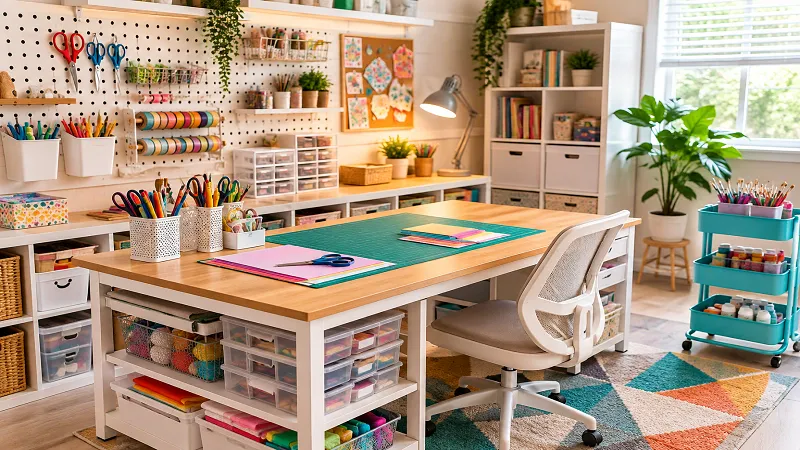
Crafting with kids is a brilliant rainy-day activity, but it usually ends with paint on the walls and glue trodden into the carpet. Setting up a dedicated space helps keep the creative chaos contained to one part of the home. The trick to a good setup is designing for cleanup speed from the start.
Wall Protection Behind the Workspace
When children get enthusiastic with paintbrushes and marker pens, the wall behind the table always takes a beating. Standard matt emulsion is porous and stains permanently, leaving ugly marks that no amount of scrubbing shifts. You can protect this vulnerable zone with a solid backdrop that handles stray glue and random splashes.
Fitting PVC panels from specialist UK suppliers like Simply Cladding creates a completely wipe-clean surface that protects your plasterwork. It’s incredibly easy to sort today. All you have to do is measure your space and order the exact size and colour you want online. A quick wipe with a soapy cloth lifts stray acrylics and wet PVA glue before it has a chance to set into the wall.
Table Surfaces That Resist Stains
The actual workspace needs to withstand sharp utility knives, heavy glitter use, and overturned water pots. Bare or lightly oiled wooden tables look lovely but they soak up glue through the grain and mark easily. A plastic top or a heavy-duty silicone mat is a much better choice for a busy home station.
You can also look for laminated utility tables that let you scrape off dried paint with a plastic putty knife. If you’re using an existing kitchen table for crafts, buy a thick PVC oilcloth cover that drops over the edges. When the session ends, you simply fold the cloth up with the mess inside and shake it out over the bin.
Layout Configurations for Small Spaces
You don’t need a massive spare room to build a functional workspace. In a small kitchen, a wall-mounted drop-leaf table gives you a sturdy surface that folds flat against the wall when not in use. That keeps the floor clear for normal family meals.
For a garage corner or a cold utility room, a portable folding trestle table is an excellent option. You can set it up in seconds and pack it away behind a door. The key is choosing a spot close to a sink so you’re not carrying dripping paintbrushes across the house.
Storage Solutions for Quick Cleanup
Clear plastic tubs are vital because everyone can see where things belong without opening every lid. Instead of sorting every colouring pencil by shade, use wide buckets where everything fits at once. Speed is the priority when you’re trying to clear the room before dinner. Here are a few essentials that help keep supplies organised:
- Clear tubs with clip-on lids to stop accidental glitter spills.
- Heavy-duty wheeled trolleys that roll into a cupboard out of sight.
- Wall-mounted pegboards to keep scissors and craft knives out of reach of younger children.
Flooring Protection for Splash Zones
Carpet is the enemy of a craft space because liquid sinks deep into the fibres and sets. If you must set up in a carpeted room, you need a physical barrier to stop paint reaching the floor. A hard polycarbonate chair mat works brilliantly under the main seat.
For larger spaces like a garage floor or a kitchen utility area, a sheet of linoleum or a washable vinyl runner beats bare floorboards. These materials don’t absorb liquids and let you sweep up stray beads and paper scraps in seconds.
Less Scrubbing, More Creating
Building a dedicated area for home projects doesn’t mean you need an expensive showroom design. It’s about reducing the friction of tidying up so you say yes to messy creative projects more often. Focus on impervious surfaces and smart storage, and you’ll spend less time scrubbing and more time enjoying the process.