
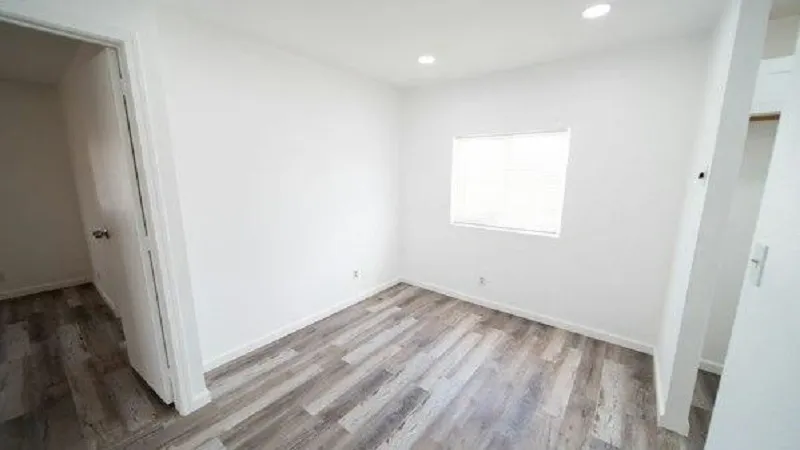
The keys are in your hand and the van comes on Saturday. Until then the rooms are empty, and empty rooms are far easier to clean than furnished ones. This is the week to deal with what the last occupants left behind, most of which is dust and grease, and some of which is alive.
Start with the bedroom
Bedrooms carry over the most from one household to the next. Skin flakes settle into carpet, dust mites feed on them, and bed bugs, when a house has them, live in the bed frame. If a mattress or a bed stays with the property, make it the first job, before your own bedding comes anywhere near it.
Pull the frame away from the wall. Check the slats, the joints and the headboard seams with a torch. Then hoover the mattress on both sides, slowly, along every seam and button, and do the underside of the slats while the frame is out.
Open the windows while you work. A stranger’s mattress smells faintly of a stranger, and a day of fresh air does more for that than any spray.
Use heat where spray does not reach
Cleaning products deal with grease on a flat surface. They do very little inside a mattress seam, a curtain hem, a sofa fold or a carpet edge, and those are exactly the places dust mites and bed bugs sit.
Heat gets in there. Steam above boiling point works into the stitching and the folds, and it leaves no chemical behind on the thing you are about to sleep on. Steam cleaners built for the home, the Laurastar AURA & IGGI among them, are sold for this job: mattresses, soft furnishings, and the small items such as toys, bottles and toothbrushes that follow a family into a new house. Take your time, let the fabric dry fully, and keep the windows open.
Do the mattress first, then the carpet edges, then anything upholstered. Hard floors can wait for the mop.
Check for bed bugs properly
Do this even if the place looks spotless. Bed bugs travel in furniture and clothing, and the NHS lists their hiding places plainly: bed frames, mattresses, furniture, behind pictures and under loose wallpaper. Look for small brown spots on the seams and along the skirting behind the bed.
The NHS advice for anything you can wash is a hot wash at 60C, then a hot tumble dry for at least thirty minutes. Anything you cannot wash goes in a sealed bag in the freezer for two to three weeks. If you find live insects, phone the council or a pest controller before the van arrives, because the treatment is far easier in empty rooms.
Kitchen and bathroom, quickly
Empty cupboards are the easiest cupboards you will ever clean. Wipe every shelf, pull the cooker out and clean the wall behind it, then run the dishwasher and the washing machine empty on their hottest cycle. In the bathroom, replace the toilet seat, the shower curtain and the plug: ten pounds and half an hour. Once the van has gone, the rest is ordinary upkeep, and the seasonal checklist in our home improvement section covers it room by room.