
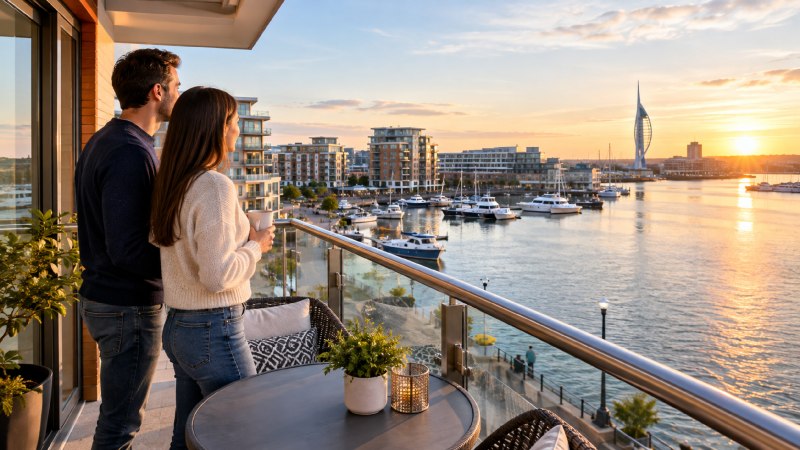
Anyone who’s crossed the Itchen Bridge at dusk understands why a river view makes people reach for their deposit. It looks like an easy yes. Before you say it, though, talk to a few letting agents in Southampton, because they know which blocks are looked after properly and which ones keep generating the same complaints.
That difference is bigger than you’d expect. Ocean Village, Town Quay, Chapel, Northam and Woolston all offer some kind of water outlook, but the buildings vary in age, upkeep and who’s living in them. Some are full of people working at the hospital, the university or the port, and others lean towards short lets, which changes the feel of a corridor at eleven on a Thursday night.
Start With the Walk, Not the Window
Southampton is small enough that location does a lot of the work for you. From Ocean Village you can be in the city centre in roughly ten minutes on foot, and Southampton Central is near enough that a commute to Winchester, Portsmouth or London Waterloo doesn’t demand a car. Further out, around Woolston, rents generally soften and the flat tends to get bigger, which suits plenty of people better than they first assume.
But the quayside has moods. Boat shows, cruise days and marina events can put a lot of traffic and noise on streets that look calm in the listing photos, so go and stand there yourself. Try a weekday evening and a Saturday morning, and pay attention to what you can hear with the windows shut.
What the Rent Is Really Covering
A waterside flat usually carries a premium, and it’s fair to ask where that money goes. Part of it is the view, obviously, but in newer blocks it also covers secure entry, lifts and communal areas that someone has to keep clean and working. You won’t pay the service charge directly, yet it shapes the rent you’re quoted.
Parking is where people get caught. Landlords often let spaces separately, and plenty of flats have none at all, so get the answer in writing instead of relying on a friendly comment at the viewing. Ask about broadband and bills too, since a rent that looks a touch high can work out cheaper once everything’s counted.
And what about the small things? Bin stores, bike storage and how deliveries are handled sound dull, but they’re the details you’ll live with every week.
Damp, Wind and Salt Air
Buildings beside tidal water deal with more humidity than those set back from it, and exposed quaysides catch a fair amount of wind. Ventilation and window seals matter here, arguably more than a fashionable kitchen does. Look for condensation on the glass, dark marks around the frames, and any stale smell inside wardrobes, because those are hard to hide on a viewing.
Balconies deserve a sceptical eye as well. A north-facing one above a blustery stretch of river might sit empty for half the year, however good it looks on screen. If the flat has floor-to-ceiling glass, ask how it copes in July and in January, since big panes can run hot in summer and cold in winter.
Flood Risk and Paperwork
Because these flats sit close to tidal water, checking flood risk for the exact address is sensible. The Environment Agency publishes flood information for England that you can search by postcode, and it takes a couple of minutes. Newer developments are usually designed with flooding in mind, though ground-floor flats and underground or ground-level car parks are the places to ask about.
Your own contents insurance is worth arranging, and you should be upfront with the insurer about the location. Then there’s the standard paperwork: the landlord or agent should protect your deposit in an approved scheme and give you the How to Rent guide, a gas safety certificate, an energy performance certificate, and evidence of electrical safety checks. A decent agent hands these over without being chased.
Reading the Agreement Properly
Tenancy rules in England have been changing, so ask the agent to explain exactly what type of tenancy they are offering you and what it means for notice periods and rent increases. It’s an unglamorous question, but the answer shapes how secure the home really is. Look at repairs too, meaning who you report them to and how quickly the landlord or agent should deal with them.
Some waterside blocks add their own management rules on top, covering things like balcony use, satellite dishes or moving furniture through shared areas. Read those as carefully as the tenancy itself.
On move-in day, photograph every room with the date attached, and check the inventory line by line. It takes an hour, maybe two, and it’s honestly one of the most useful things a tenant can do when the deposit conversation comes round at the end.
Final Thoughts
Southampton’s waterfront has changed a great deal in a couple of decades, and it looks set to keep changing as regeneration reshapes the quays and the edges of the centre. For tenants that probably means more choice, and more variation in quality, so asking sharp questions is likely to become a bigger part of renting here rather than a smaller one.
A waterside flat can be a very good place to live if you choose it with clear eyes. Judge it on an ordinary wet Tuesday rather than a bright Saturday in June, and decide whether the building, the commute and the rent still make sense. If they do, the water outside the window becomes a bonus rather than the entire reason you signed.